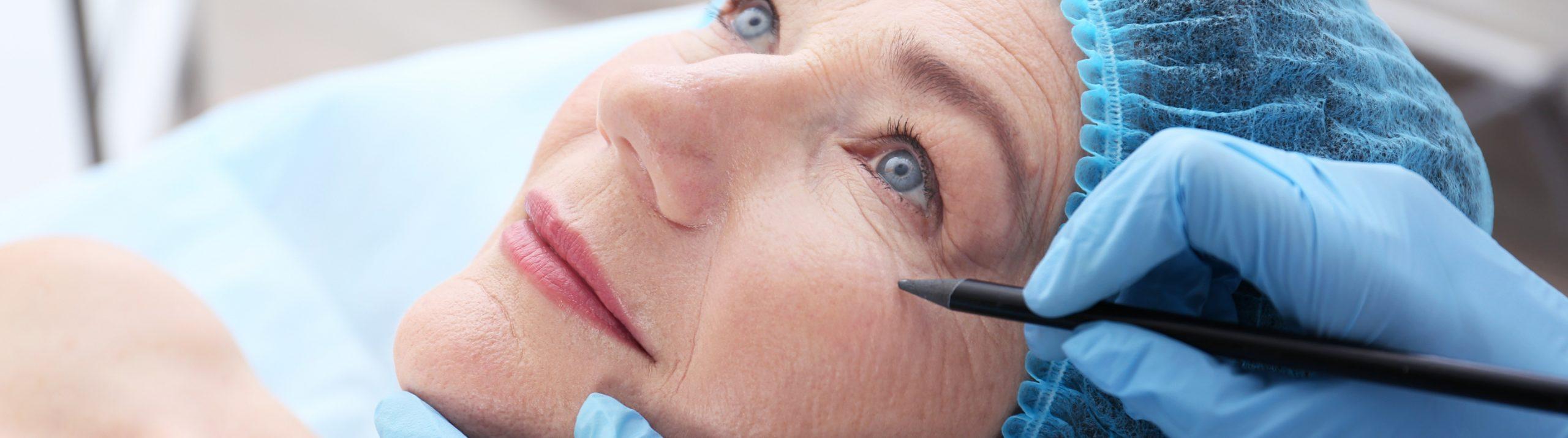
Facelift in Sabadell
The face and neck can lose firmness with age and factors such as sun exposure. A facelift can address changes such as sagging cheeks or loss of jawline definition. At your consultation, you can discuss which areas to treat and what result you might expect.
- FICHA TÉCNICA
- Tiempo quirúrgico: Around 2–4 hours
- Anestesia: General anaesthesia
- Hospitalización: Usually 1 night
- Recuperación: Around 1 week for initial recovery
- Resultados: Visible changes over the first few weeks


Before and after a facelift
The images show changes in facial contours. A facelift can reposition tissues and address excess skin. It can be considered alone or alongside blepharoplasty (ES), rhinoplasty or facial fat transfer, depending on the areas to treat and the extent of surgery.
What is a facelift?
It is surgery to redefine the contours of the face and, if appropriate, the neck. It may involve repositioning deeper tissues and removing excess skin. Depending on the technique, the surgeon may also work on the tissues that support the skin.
Facelift scars
Incisions are often placed around the ears and along the hairline. The location and appearance of the scars over time depend on the technique, the area treated and how each person heals.
Facelift surgery in Sabadell
At Clínicas NG in Sabadell, the team assesses which techniques may suit your case. You can request a consultation to learn about the surgical plan, recovery and cost.
Choosing the technique and areas to treat
The technique depends on the changes to be addressed and the anatomy of the face.
Upper face
A forehead lift or brow lift can reposition drooping eyebrows and change the appearance of the forehead. Blepharoplasty can be considered in combination if the eyelids are also a concern.
Midface
Cheek tissue can be lifted and the cheekbone area redefined. One option is to work on the superficial musculoaponeurotic system, known as the SMAS. The team also assesses whether any excess fat should be treated.
Lower face and neck
When assessing loss of jawline definition or fullness under the chin, the surgeon distinguishes between skin, fat and other tissues in the neck. A neck lift may help redefine the contour in suitable cases.
Preparing for a facelift
Your surgeon examines your skin, its elasticity and your facial structure. They explain which anaesthetic is planned and where the procedure would take place.
At Clínicas NG, the procedure is usually planned under general anaesthesia. The team tells you which tests are needed. If you smoke, they will advise you on preparation, as smoking can affect healing.
What happens during surgery
Your team explains how to prepare for admission and what to bring to hospital. The agreed procedure is performed under the planned anaesthetic. A dressing may be applied at the end, depending on the case.
The first stage of facelift recovery
You may need an overnight stay. The stay can be longer depending on the procedure and whether it is combined with another operation. Your team advises on head position and dressing care. Swelling, discomfort, bruising or changes in sensation can occur during the first few weeks. The team checks the dressing and any stitches that need removal at follow-up.
Recovery after a facelift
Initial recovery and the return to usual activities are gradual. Many people resume some of their routine after two or three weeks, depending on their progress. The contour becomes clearer over the following weeks and continues to change over the following months. The team explains when to resume physical exertion and activities where you could be knocked.
Read more about facelifts on our blog
Ten treatments for facial rejuvenation (ES)
Marionette lines from the mouth to the chin (ES)
Thinking about having surgery in summer? (ES)