Beyond fat: lipoedema, a condition that changes your body
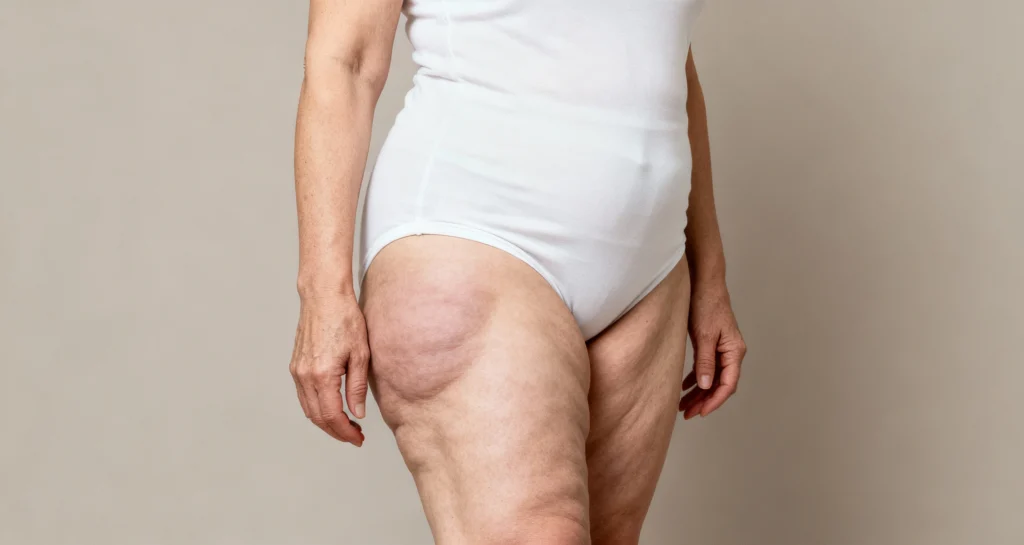
Lipoedema goes beyond a simple build-up of fat. Research shows that it is a disorder in which fatty tissue behaves abnormally.
Lipoedema can therefore cause pain, chronic inflammation, functional difficulties and emotional distress. It can also increase body volume disproportionately.
As the condition progresses, increasing fibrosis gives the tissue an uneven texture, making movement harder and adding stiffness.
When fat behaves differently
Lipoedema is a chronic condition that affects almost exclusively women. It involves abnormal growth of fatty tissue in the legs, buttocks and, in some cases, arms. It does not respond to dieting, does not go away with exercise and is not proportional to overall body weight.
The explanation lies in the way adipose tissue, or fat, functions. Under normal conditions, fat cells grow or shrink in response to energy balance. In lipoedema, these cells multiply and function abnormally, becoming inflamed without a clear trigger and creating a local environment that changes the structure of the surrounding tissue.
There is also a vascular component. Interstitial fluid builds up, contributing to the characteristic feeling of heaviness. Lipoedema may also emerge at times of hormonal change such as puberty, pregnancy or perimenopause.
What lipoedema feels like in everyday life
The legs often feel heavy, tight or sore, particularly after standing for long periods. Many patients describe stabbing sensations, internal pressure or extreme tenderness to the touch, even in the early stages.
Bruising easily without an obvious knock is another sign of this vascular fragility. Beyond the physical effects, it can also affect self-esteem. When diet and exercise make little difference, the result can be frustration and a misplaced sense of guilt.
Can it be avoided or prevented? What the science says
There is currently no evidence that lipoedema can be prevented entirely. It has a strong genetic basis and is influenced by hormones. However, some factors may slow its progression or ease symptoms.
Maintaining a healthy weight can help because associated obesity can increase systemic inflammation, even though lipoedema is not directly determined by body weight. Regular physical activity, especially low-impact exercise such as swimming, indoor cycling or walking, supports lymphatic and capillary circulation. Similarly, managing stress and following eating habits that reduce inflammation, including foods rich in omega-3, plenty of vegetables and a low glycaemic load, may help support the overall health of fatty tissue.
Care may also include the following treatments:
- Lymphatic massage
- Pressotherapy
- Radiofrequency
- Carboxytherapy
- Low-level laser therapy
- If you wear compression garments, use medical-grade garments.
Importantly, none of these measures changes the underlying behaviour of lipoedema fat cells. They may improve comfort, ease pain and slow the changes.
When surgery is considered for lipoedema
In advanced stages, or when symptoms significantly affect body shape or quality of life, surgery becomes a therapeutic option that goes beyond appearance. Liposuction for lipoedema may reduce abnormal volumes of fatty tissue while preserving important structures.
The aim is to restore body contours and mobility, reduce pain, improve walking mechanics and slow progression towards advanced fibrosis. The procedure goes beyond a quick cosmetic fix. Affected fat is removed carefully to protect lymphatic vessels and supporting structures.
Severe lipoedema does not have to define your body. When pain and swelling have a name, there may also be a treatment path, in this case liposuction. For people with lipoedema, the procedure can be part of a process of recovery and relief.