Why some people’s skin ages faster despite similar skincare
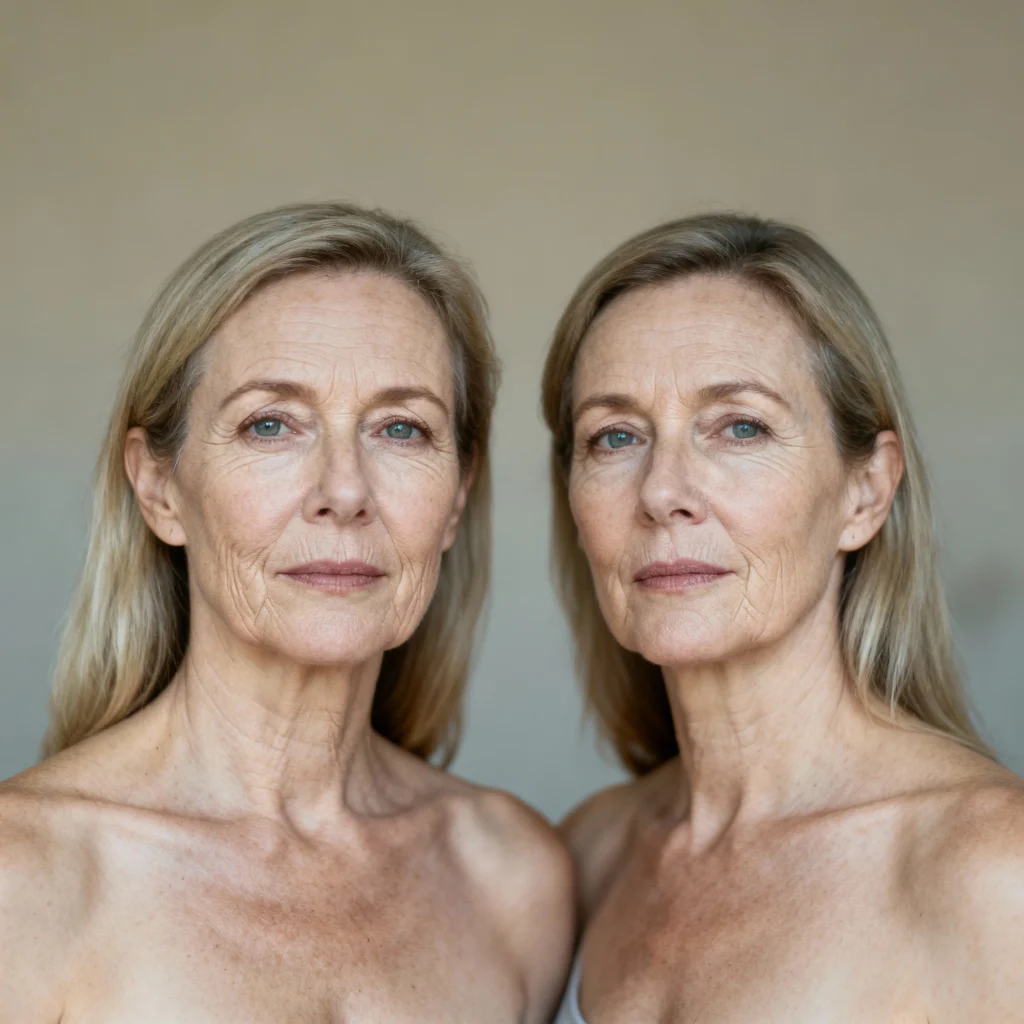
Two people may be the same age, follow similar skincare routines and lead similar lives, yet their skin can age differently.
That visible difference between skin that looks firm and radiant and skin that appears thinner, with early wrinkles or a dull tone, cannot be explained by genetics alone.
Research into skin ageing shows that how fast we age depends largely on how our skin responds to damage, more than on how much damage it receives.
Ageing as a loss of biological balance
Under normal conditions, the skin has effective repair mechanisms of its own. It neutralises free radicals, replaces damaged cells and maintains its protective barrier. Problems arise when these systems become depleted or lose their regulation.
The balance is lost gradually. Over time this results in a more fragile, less functional dermal structure.
Why does some skin age faster?
Two people’s skin can react very differently to the same environment. In one, the antioxidant system effectively neutralises free radicals. In the other, the inflammatory response remains active for longer, causing microscopic damage. How quickly the skin tends to dehydrate also matters.
This difference at the molecular level explains why some skin appears to age faster despite similar skincare and environmental exposure. Skin type and colour also influence the rate of ageing.
Two people’s skin may look alike from the outside, but what happens beneath the surface will determine whether it ages slowly or shows signs of ageing early.
A little-known concept: inflammaging
One of the most studied mechanisms in recent years is inflammaging, or ageing driven by chronic, low-grade inflammation. This involves persistent activation of the immune system that keeps tissues on constant alert without visible or painful inflammation.
Over years, this process alters the function of fibroblasts, the cells that produce collagen, and weakens the extracellular matrix. The skin consequently loses density, elasticity and its ability to recover. Skin that copes less well with this inflammation tends to deteriorate faster, even with the same type of external care.
Tailoring treatment to how the skin is ageing
When medical rejuvenation treatments work with the body or on its deeper structures, the condition of the skin at the time matters. Loss of support calls for structural correction. Where tissue can still respond, treatment can focus on reactivating its function.
Plastic surgery works on the deeper structural layers, where sagging and changes in the distribution of facial volume require mechanical and anatomical correction. Advanced lasers, for example, can stimulate regeneration in the dermis without altering facial architecture.