What if the past were less fixed than we think?
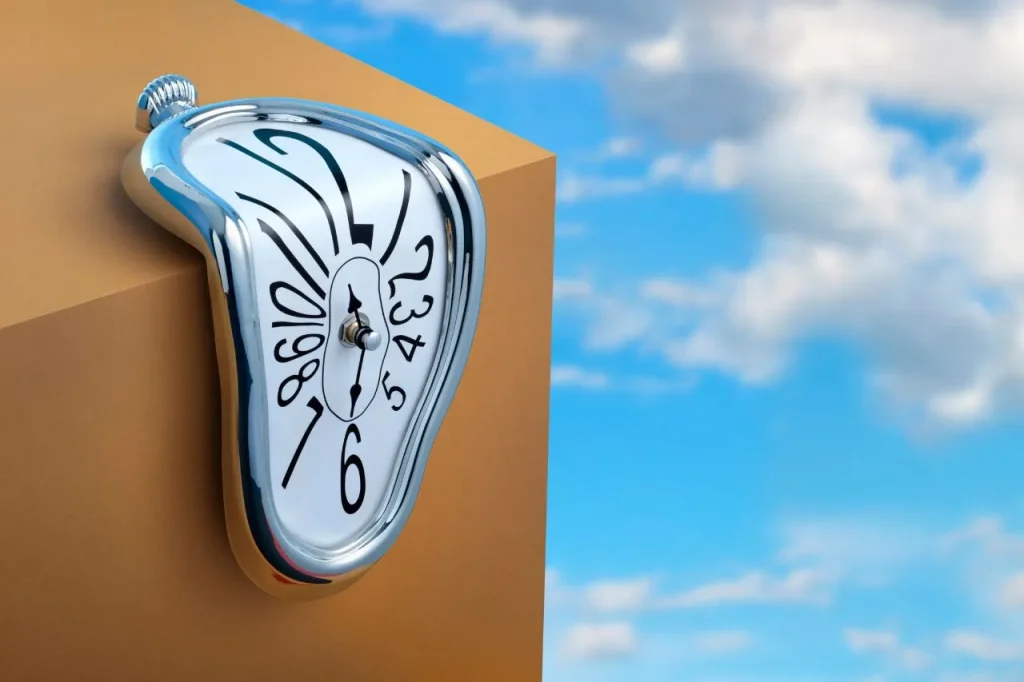
For centuries, we have lived with an almost intuitive image of time: an arrow moving from a fixed past towards an uncertain future. This view, deeply rooted in culture, history and the classical scientific method, holds that the past has already happened and the future is yet to come. In some of the most contested areas of quantum physics, however, the possibility arises that the future could influence what has already happened.
This idea is known as retrocausality: the possibility that later events, in the present or even the future, could have a detectable effect on events that have already taken place in the classical view. The hypothesis has emerged from mathematical models and delayed-choice experiments proposed by the physicist John Archibald Wheeler in the 1970s and repeated in various forms since then.
The Cambridge philosopher of physics Huw Price has argued that accepting influences that run backwards in time could resolve familiar paradoxes in quantum mechanics without having to invoke parallel universes.
That is the scientific debate so far. A more uncomfortable question follows.
What if certain decisions affected how the past took shape?
There is no scientific evidence that the human mind can change historical events. Neuroscience and theoretical physics have raised a subtler question: how we experience and perceive the past may be less stable than we think.
Whenever we recall a memory, we reconstruct it. If time is less rigid at its deepest level than we suppose, the line between what happened and what we believe happened would become harder to draw.
Different paths consistent with the present
Physics does not establish this as a certainty. Such questions belong in uncertain territory where the mathematics can still fit, even when our intuition fails to keep up.
If we ever showed that time is interwoven instead of moving in a straight line, the question would change. We might ask how many different forms the past could have taken before leading to this particular choice, at this particular moment.