Orthognathic surgery in Sabadell
The relationship between the jaws affects your bite and facial proportions. At Clínicas NG, Dr Fran Cuesta González guides the assessment and planning with the professionals who need to be involved.
- FICHA TÉCNICA
- Tiempo quirúrgico:
- Anestesia:
- Hospitalización:
- Recuperación:
- Resultados:
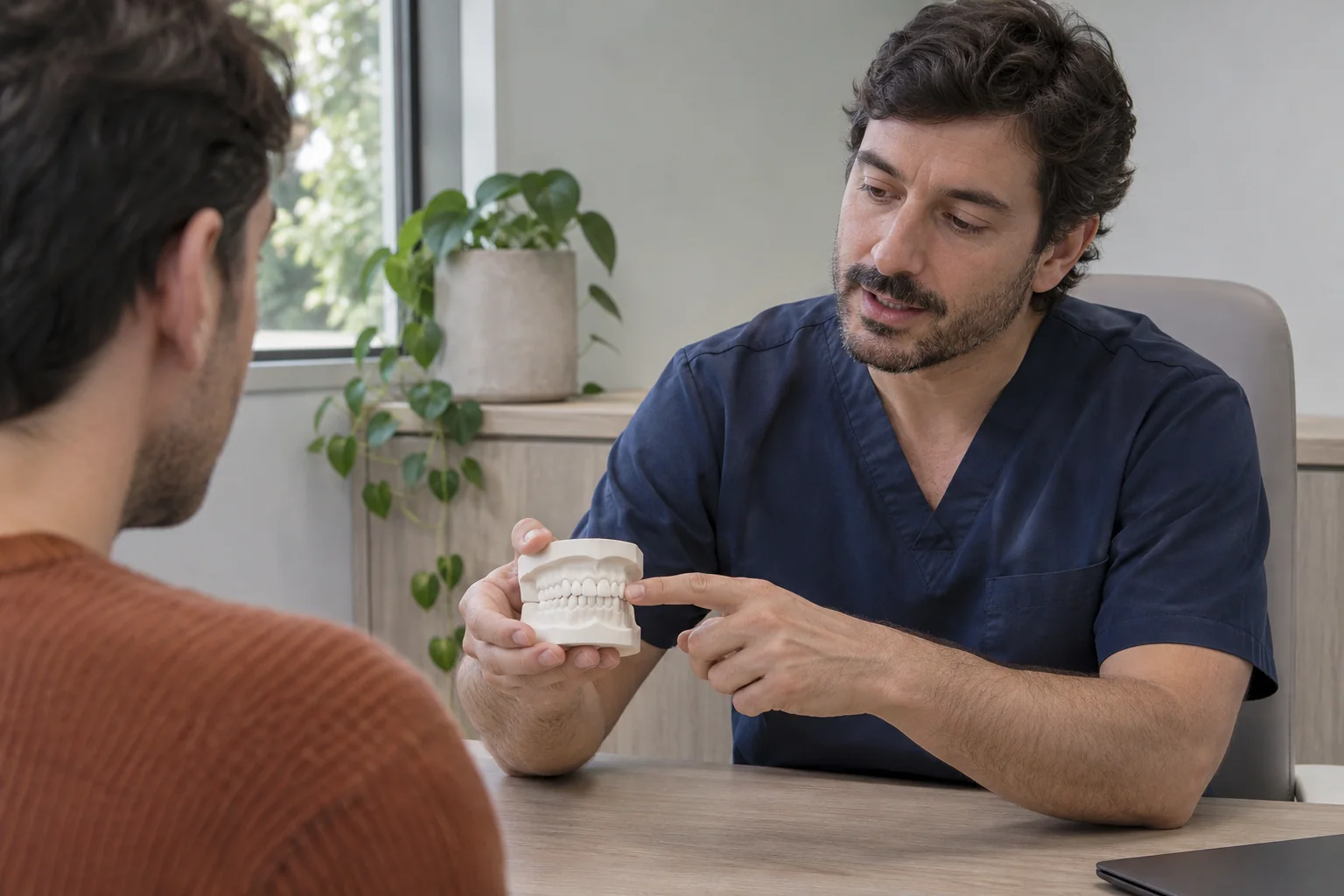
Illustrative image.
When your concerns involve how your teeth meet and the position of your jaws, the facial examination needs to be considered alongside the dental assessment. The oral and maxillofacial surgeon explains what information is needed before proposing treatment.
How your bite relates to your facial structure
Orthognathic surgery changes the position of the upper jaw, lower jaw or both to treat certain dentofacial conditions. The decision takes into account how the teeth meet, function and facial proportions.
Assessment may include a facial and dental examination, photographs and imaging. Dr Cuesta reviews the findings and explains which options require coordination with other professionals.
The role of the chin in diagnosis
A procedure focused on the chin has a different scope from surgery that repositions the jaws. The assessment helps distinguish the two and, where appropriate, consider how their treatments might fit together.
Planning treatment for teeth and jaws together
Maxillofacial surgery and orthodontics are coordinated in many cases. If orthodontic preparation is needed, it usually starts before surgery so that the teeth are aligned with the planned position of the bones.
The sequence depends on your bite and individual needs. Orthodontic treatment may continue after surgery to fine-tune how your teeth meet.
What is agreed before surgery
The team explains which bones it proposes to move and why. The operation usually takes place under general anaesthesia, with most incisions inside the mouth. The bones are repositioned as planned and usually secured with plates and screws.
The team explains the anaesthetic, expected stay and follow-up arrangements during preparation. The extent of the procedure affects the aftercare you will need.
Recovery and checking your bite
Swelling and discomfort may occur during the first few days. The team gives advice on eating, oral hygiene and gradually returning to your activities. At follow-up, we check healing and how your teeth meet.
Before deciding, discuss risks such as bleeding, infection, changes in sensation and unwanted changes to the bite or facial contours. Follow-up is tailored to the surgery and coordinated with orthodontic reviews when appropriate.
Further reading
Cambridge University Hospitals provides a patient guide to corrective jaw and chin surgery.
Request a consultation at Clínicas NG
Tell the team what you would like assessed and bring any reports you have. The consultation gives you a chance to discuss your options, their limits and how aftercare will be arranged.
Meet Dr Fran Cuesta and the medical team · Explore facial surgery